Cyberdillo: Difference between revisions
Created page with "thumb|right| = Overview = *'''Full Name:''' Cyberdillo *'''Code:''' FZ-SW0005 *'''Type:''' First-person shooter *'''Developer:''' Pixel Tech..." |
No edit summary |
||
| Line 58: | Line 58: | ||
|} | |} | ||
* - Need review page | * - Need review page | ||
== Disc Archaeology == | |||
''Findings from a byte-level analysis of the US retail disc image (178,569,216 bytes / 87,040 blocks; 297 filesystem entries).'' | |||
=== Two missing levels === | |||
The disc ships <code>level01.rsc</code> through <code>level08.rsc</code>, then <code>level10.rsc</code> and <code>level11.rsc</code> — '''<code>level09.rsc</code> does not exist''', its numbering gap pressed into the retail disc. The executable additionally references a <code>level00.rsc</code> that is not on the disc either: the level roster was numbered 00–11 in code, and two of those slots never shipped. | |||
=== A debug symbol file on a retail disc === | |||
<code>/Cyber_Music/playbgndmusic.sym</code> (40,260 bytes) is a full Macintosh debug-symbol file for the background-music task — larger than the 24,780-byte program it describes — containing 1,500+ type, structure and function names. Its first entry names the source file: <code>:Objects:LoopSterioSoundFile.c.o</code> — "stereo" misspelled in the codebase. The executable carries a matching typo of its own: ''"Unable to start backtground music task."'' | |||
=== The difficulty settings are editable text files === | |||
<code>DIFFOPTS.000</code>/<code>.001</code>/<code>.002</code> — one per difficulty — are plain-text enemy stat tables, developer comments included: | |||
<code>#ENEMY HitPts,WalkSpd,TurnSpd,WeapDamage,ShotRange,ShotDelay,Mass,Size</code> | |||
followed by rows for the full bestiary (<code>Dillo</code>, <code>Barfman</code>, <code>Spraycan</code>, <code>Fish</code>, <code>Tank</code>, <code>Saucer</code>, <code>Gumball</code>, <code>TVman</code>, <code>Horse</code>, <code>Eyeball</code>, <code>Hotdog</code>, <code>Dethball</code>) — the entire game balance modifiable with a text editor. | |||
=== Debug functions compiled in === | |||
The executable retains cheat/debug strings: <code>SMART BOMB</code>, <code>JUMP TO LEVEL</code>, <code>SOUND TEST</code>, and a status line <code>LEVEL: xx SUBLEVEL: x</code>. | |||
=== Macintosh bones === | |||
The game's <code>.rsc</code> archives use Macintosh resource-fork type codes — the executable's type list includes classic Mac types (<code>PICT</code>, <code>DLOG</code>, <code>DITL</code>, <code>snd </code>, <code>STR#</code>, <code>CURS</code>) mixed with the game's own inventions, among them <code>FART</code>, <code>SCUM</code> and <code>LWAD</code> (a nod to Doom's WAD format). | |||
=== Shipped odds and ends === | |||
* <code>/ls</code> — the 3DO SDK's directory-listing shell utility, left at the disc root. | |||
* The storage-manager utility ships twice: once at root and once in <code>/Cyber_Tuner</code> with its own UI art. | |||
* <code>/Cyber_Voice/poodle.aif</code> is a zero-byte file; <code>Player_Screens</code> includes a <code>Menu.img.blank</code> and a file named <code>dummy</code>. | |||
* The soundtrack's shipped filenames form their own review of the game: <code>DOGBUTT.AIF</code>, <code>PEE.AIF</code>, <code>SKINFLUT.AIF</code>, <code>BARFMAN.AIF</code> — alongside <code>GREENDAY.AIF</code> and <code>PACMAN.AIF</code>. | |||
* Menu art is branded <code>3DO_Studio.anim</code> / <code>3DO_Studio_Logo.img</code>. | |||
=== No credits, no copyright === | |||
A full-image sweep finds no staff credits as text and '''no copyright string belonging to the game at all''' — the only copyright notice anywhere on the disc is Matsushita's own, inside a system component: ''"Copyright (C) Matsushita Electric Industrial Co.,Ltd. 1994"''. Any game credits exist only inside the FMV files. | |||
=== Filesystem notes === | |||
The root directory (unusually, two blocks long) verifies hash-identical across all seven redundant copies. The copies of <code>/System/Devices</code>, <code>Drivers</code>, <code>Folios</code>, <code>Programs</code>, <code>Scripts</code> and <code>rom_tags</code> disagree between generations — the common multi-pass mastering artifact, pressed into every disc; not dump damage. | |||
=== Unallocated space === | |||
10,545 blocks (~21 MB) belong to no file. Every byte was checked: standard <code>iamaduck</code> mastering filler (with a single zeroed block), nothing hidden inside. | |||
== Other Versions == | == Other Versions == | ||
Latest revision as of 06:49, 14 August 2026

Overview
- Full Name: Cyberdillo
- Code: FZ-SW0005
- Type: First-person shooter
- Developer: Pixel Technologies
- Publisher: Panasonic
- Language: English
- Release Date: 1996
- Region: NA
- Barcode: 037988830305
- Local Title:
- Rarity: 1
- Notes:
Overview
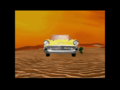
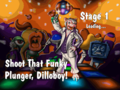
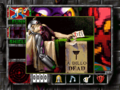
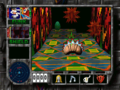
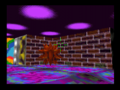
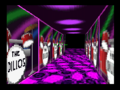
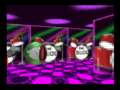
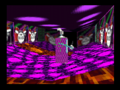
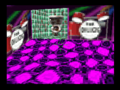
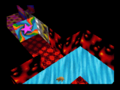
After being run over by a car, our hero Armadillo is brought back to life by an evil cyber-genetic company. He sets out to stop their evil plans in psychedelic 70's era levels when disco was king. Gather items such as bell bottoms, platform shoes, 8-track players, and lava lamps to keep your shield and funk levels up.
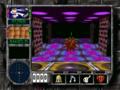
Rather than guns, you shoot plungers and throw princess wands at various enemies such as flying eye balls and laughing gas containers. Open doors as you move through each level (of 4 stages each) and find the specific item needed to advance to the next stage. Stop lights hang from the ceiling in certain areas and will drain your health if you pass under them when they are red. When green, you can pass them with no consequence. There are different special weapons, health (such as crickets and grass hoppers) and shield items in each level. If you run into a Relax laxative box, you will have to find a toilet in 20 seconds or you will die.
Game Play
Cyberdillo is a first-person shooter in which the player takes the role of the Cyberdillo, an armadillo who was run over by a car and was made into a cyborg. Starting off with a plunger gun, Cyberdillo must collect items such as platform shoes or bellbottoms to progress to the next level.
Enemies the player come across include hairspray and bipedal hotdogs. The player can also collect power-ups like the bone flute, which temporarily causes the screen to go black (a play on the myth about masturbation), and the laxative which will kill you if you're unable to find a toilet in time.
Development
Cyberdillo was developed by Pixel Technologies and published by Panasonic in 1996.
Reception
Cyberdillo received mixed reviews from video game critics.
A reviewer for GamePro called the gameplay "redundant" and lacking Doom's suspense. The reviewer was also mixed on the game's music. While calling it "tongue-in-cheek" and adding charm to the game, they added that the player's tolerance would depend on their liking of disco. They also described the voice acting as "unintelligible".
Steve Bauman from Computer Games Magazine considered the soundtrack to be the best part of the game, while calling the game mediocre.
Hardcore Gaming 101 criticized the controls for being too slippery and its level designs for being confusing.
Next Generation reviewed the 3DO version of the game, and stated that "Although Cyberdillo moves surprisingly fast on 3DO, the control is very loose and the graphics are far from cutting edge. The developers deserve credit for trying to make something that's different, but in the end, Cyberdillo is either a cute novelty of a run-of-the-mill Doom game – neither of which make for much long-term entertainment."
Magazine Reviews
| Name | Date | Region | Rating | Notes |
|---|---|---|---|---|
| Game Players | May 96 |  |
63% | Cyberdillo moves surprisingly fast on the 3DO, but the control is real loose and the graphics are anything but cutting edge. I do give the developers credit for trying something new and different, but in the end Cyberdillo is either a cute novelty or a run of the mill Doom game, neither of which is going to give the 3DO Multi-player the shot in the arm it so desperately needs. |
| GamePro | Apr 96 | |
60% | Cyberdillo mocks standard shooters and on that level it succeeds mildly. But there's not enough excitement to make this a joke worth retelling. |
- - Need review page
Disc Archaeology
Findings from a byte-level analysis of the US retail disc image (178,569,216 bytes / 87,040 blocks; 297 filesystem entries).
Two missing levels
The disc ships level01.rsc through level08.rsc, then level10.rsc and level11.rsc — level09.rsc does not exist, its numbering gap pressed into the retail disc. The executable additionally references a level00.rsc that is not on the disc either: the level roster was numbered 00–11 in code, and two of those slots never shipped.
A debug symbol file on a retail disc
/Cyber_Music/playbgndmusic.sym (40,260 bytes) is a full Macintosh debug-symbol file for the background-music task — larger than the 24,780-byte program it describes — containing 1,500+ type, structure and function names. Its first entry names the source file: :Objects:LoopSterioSoundFile.c.o — "stereo" misspelled in the codebase. The executable carries a matching typo of its own: "Unable to start backtground music task."
The difficulty settings are editable text files
DIFFOPTS.000/.001/.002 — one per difficulty — are plain-text enemy stat tables, developer comments included:
#ENEMY HitPts,WalkSpd,TurnSpd,WeapDamage,ShotRange,ShotDelay,Mass,Size
followed by rows for the full bestiary (Dillo, Barfman, Spraycan, Fish, Tank, Saucer, Gumball, TVman, Horse, Eyeball, Hotdog, Dethball) — the entire game balance modifiable with a text editor.
Debug functions compiled in
The executable retains cheat/debug strings: SMART BOMB, JUMP TO LEVEL, SOUND TEST, and a status line LEVEL: xx SUBLEVEL: x.
Macintosh bones
The game's .rsc archives use Macintosh resource-fork type codes — the executable's type list includes classic Mac types (PICT, DLOG, DITL, snd , STR#, CURS) mixed with the game's own inventions, among them FART, SCUM and LWAD (a nod to Doom's WAD format).
Shipped odds and ends
/ls— the 3DO SDK's directory-listing shell utility, left at the disc root.- The storage-manager utility ships twice: once at root and once in
/Cyber_Tunerwith its own UI art. /Cyber_Voice/poodle.aifis a zero-byte file;Player_Screensincludes aMenu.img.blankand a file nameddummy.- The soundtrack's shipped filenames form their own review of the game:
DOGBUTT.AIF,PEE.AIF,SKINFLUT.AIF,BARFMAN.AIF— alongsideGREENDAY.AIFandPACMAN.AIF. - Menu art is branded
3DO_Studio.anim/3DO_Studio_Logo.img.
No credits, no copyright
A full-image sweep finds no staff credits as text and no copyright string belonging to the game at all — the only copyright notice anywhere on the disc is Matsushita's own, inside a system component: "Copyright (C) Matsushita Electric Industrial Co.,Ltd. 1994". Any game credits exist only inside the FMV files.
Filesystem notes
The root directory (unusually, two blocks long) verifies hash-identical across all seven redundant copies. The copies of /System/Devices, Drivers, Folios, Programs, Scripts and rom_tags disagree between generations — the common multi-pass mastering artifact, pressed into every disc; not dump damage.
Unallocated space
10,545 blocks (~21 MB) belong to no file. Every byte was checked: standard iamaduck mastering filler (with a single zeroed block), nothing hidden inside.
Other Versions
An MS-Dos version was released at the same time.
Media
-
 Back
Back -
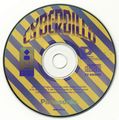 Disc
Disc -
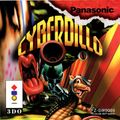 Jewel Case Front
 -
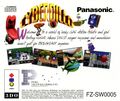 Jewel Case Back
 -
 Screenshot
 -
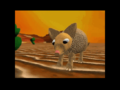 Screenshot
 -
 Screenshot
 -
 Screenshot
 -
 Screenshot
 -
 Screenshot
 -
 Screenshot
 -
 Screenshot
 -
 Screenshot
 -
 Screenshot
 -
 Screenshot
 -
 Screenshot
 -
 Screenshot
 -
 Screenshot
 -
 Screenshot
 -
 Screenshot


