Battle Chess(NA)

Overview
- Full Name: Battle Chess
- Code:
- Type: Board game
- Developer: Krisalis Software
- Publisher: Interplay Productions
- Language: English
- Release Date: 1993
- Region: NA
- Barcode: 0 40421 29002 4
- Local Title:
- Rarity: 1
- Notes:
Overview
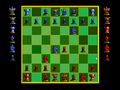
A worthy attempt to make chess attractive to beginners. What could be more interesting than watching chess pieces fight? However, 3D graphics are not as expressive as they could be. Animation is good for the late 80s, but not the mid 90s! Where are the latest fashion trends in the face of interactive videos and digitized fighters ??? Nevertheless, the program includes a "chess engine" that makes an impression even on notorious chess players, and the 2-dimensional board is a good example of clarity and simplicity.
The very fact that this typically computer game appeared on 3DO proves once again that a great future was predicted for the system. Whatever I say there, the game is executed at a decent level.
Game Play
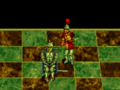
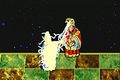
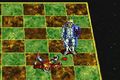
Battle Chess follows the same rules as traditional chess, with pieces moving in an animated fashion and battles playing out so that the capturing piece defeats its target. Furthermore, when checkmate is delivered, the checkmating piece fights and defeats the king. Since there are six types of pieces for each color, and a king cannot capture a king, there are a total of 35 different battle animations.[2] The rook, for example, turns into a rock monster and kills a pawn by smashing its head, and the rook kills the queen by eating her. There are some pop-culture homages; the knight versus knight animation references the black knight fight in Monty Python and the Holy Grail, and the king versus bishop fight pastiches the short battle between Indiana Jones and a swordsman in Raiders of the Lost Ark.
The game can be also played in a 2D version with no animations.
The game has an opening library of over 30,000 moves.
Development
Battle Chess was the first title developed and published by Interplay Entertainment themselves after ending their relationship with Electronic Arts, besides Neuromancer. The game was featured in the 1992 film Knight Moves about a chess grandmaster who is accused of several murders.[3] Battle Chess producer and Interplay's founder Brian Fargo expressed his fondness for the game in a 2006 interview, although he added that he did not think there would be much of an audience for it today.[4]
An apocryphal story of the development was the invention of "The Duck" (an example of Parkinson's law of triviality): The producers of the game were known to demand changes to the game, presumably to make their mark on the finished product. To this end, one animator added a small duck around the queen piece, but made sure that the sprite would be easily removable. Come review, the producers, predictably, okayed everything but asked for the duck to be removed
Reception
Battle Chess sold 250,000 copies by February 1993. (Unsure of how many copies the 3DO sold)
Interplay won "Best Graphics Achievement In A Non-Graphics Product" from Software Publishers Association (later renamed to Software and Information Industry Association) for Battle Chess.[16] In 1994 Computer Gaming World added it to the magazine's Hall of Fame honoring those games rated highly over time by readers, describing Battle Chess as "a showcase product for the first level of multimedia standards".[17] In 1996 the magazine ranked it as the 106th best game of all time for its "funny, elaborate animated sequences and spectacular special effects
Magazine Reviews
| Name | Date | Region | Rating | Notes |
|---|---|---|---|---|
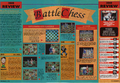
| Consoles Plus | Jan 94 |  |
78% | Les programmeurs ont mal dosé la vitesse des combats. Le principe de Battlechess est très bon, mais sa lenteur risque fort de vous décevoir. |
| SuperGamePower | Sept 94 |  |
66% | Jogo de xadrez para videogame é coisa antiga. Começou na década de 70 com o Atari. Nos anos 80, com a febre dos PC computers, tornou-se possível jogar xadrez na tela. Battle Chess que é lançado agora para 3DO é uma versão melhorada deste jogo de computador que fez muito sucesso junto aos apreciadores de um bom xadrez. São duas telas: bidimensional (tabuleiro normal, visto de cima) e tridimensional (com animação de peças). Além disso, pode-se salvar a partida para disputar mais tarde e apelar para sugestões do computador nas horas decisivas. O ato de "comer" uma peça no 3D dá sequência a uma batalha entre personagens em que o forte é o humor negro: decapitação, tiros e envenenamento. Para quem sempre quis aprender xadrez e não tinha paciência, eis a oportunidade: o modo Tutorial ensina as manhãs do tabuleiro, além de dar um histórico do jogo. |
| Video Games* | Apr 94 |  |
62% | Wenn die witzigen Animationen nicht wären, könntet Ihr Battlechess getrost vergessen. Einige der Kampfszenen sind jedoch echt genial, besonders die Anleihen an Monty Pythons “Ritter der Kokosnuß“ muß man gesehen haben. Der Reiz des Neuen läßt aber schnell nach, bald schaltet Ihr die Battlesequenzen ab. Als reine Schachsimulation enttäuscht Battlechess, denn von der Spielstärke her bietet es ungefähr das gleiche Niveau wie Dirks ungewaschene Socken (allerdings riecht die CD besser). Geübten Schachfans wird der Computergegner keinerlei Probleme bereiten, höchstens als Sparringspartner zum Ausmerzen von Leichtsinnsfehlern ist er zu gebrauchen. Eine spielstarke Schachsimulation wäre mir lieber. |
| EGM* | Jan 94 |  |
62% | If you are a chess fan, then you may want to check this title out. This is simply chess in a three-dimensional board with pieces that walk, talk, and fight to the finish when taking another players' chess pieces. |
| 3DO Magazine* | Dec 94 |  |
40% | A worthy attempt to make chess exciting for beginners, its 3D graphics aren't as flash or funny as they might be. However there's an impressive chess engine under the hood while a 2D board is a model of clarity and simplicity. |
- - Need review page
Other Versions
The original version was released on the Amiga in 1988 and went onto multiple systems including - Acorn Archimedes, Amiga CD32, Amiga CDTV, Apple IIGS, Apple IIe, Atari ST, Commodore 64, MS-DOS, FM Towns, NES, Mac OS, NEC PC-9801, X68000 and Microsoft Windows.
The game was remastered in 2015, under the steam release: Battle Chess:Game of Kings.
Credits
- 3DO Programming Keith Birkett (Krisalis Software)
- Battle Chess CD Programming Greg Christensen
- Original Battle Chess Michael Quarles, Jay Patel, Troy Worrell
- Artwork David Mosher, Arlene Caberto, Todd Camasta
- Music Scott La Rocca
- Additional Music Arrangement Rick Freeman
- Sound Effects Alan Howarth, Jason King, Scott La Rocca, Brian Mendelsohn
- Synclavier Operation Brian Mendelsohn, Rick Freeman, Alan Howarth, Jason King, Mike Papa
- Voices Art Dutch, Ryan O'Flannigan, Douglas Coler, Greg Snow, Sandra Snow, KA Mouston, Dave Surtees
- Tutorial Bruce J Balfour, Roger Rittner Productions
- Original Producer Troy Worrell
- Producer Bill Dugan
- Executive Producer Brian Fargo
- Director of Quality Assurance Kirk Tome
- Assistant Director of QA Rodney Relosa
- Testers Bill Church, Floyd Grubb, Jason Taylor, Chris Tremmel
- Additional 3DO Graphics Phil Hackney, Neil Adamson, Tracy Hudson
- Krisalis — Programmers Keith Birkett, Nigel Little, Richard Teather, Jason Butler, Mat Cook, Omar 'Ramo' Aysha, John Stephens, Andy Ware, Rob Hill, Mark Incley, Simeon Pashley
- Krisalis — 'Wanna be' Programmer Pete Harrap
- Krisalis — Graphics Artists Neil Adamson, Phil Hackney, Tracy Hudson, Paul Dobson, Dave Colledge, Mark Potente, Darren Hebden
- Krisalis — Quality Assurance Steve Sumner
- Krisalis — Administration Claire Brown, Amanda Pugh, Paul Kirk, Tim '10 a penny' James, Siobhan Moran, Donna Stead
- Krisalis — The Management Tony Kavanagh, Pete Harrap, Shaun Hollingworth
- Special Thanks Tony Myles, Neil Day, 3DO
Disc Archaeology
Findings from a byte-level analysis of the US retail disc image (272,941,056 bytes / 133,120 blocks).
The hidden "Alternate Credits"
The executable contains a complete hidden second credits sequence, written by 3DO-conversion programmer Keith Birkett. It opens "Excuse my vanity" followed by his own name eight times and the self-review "That is so sad!", then runs through a long personal message: he'd spent the whole year on Battle Chess ("First the Archimedes version then 3DO. NEVER AGAIN"), complains the font has no exclamation mark ("I need an exclamation mark! The above line is full of exclamation marks. I guess its not in the font."), greets family and friends by name, confesses a history as a disruptive MUD player ("Especially the ones at Strathclyde and Newcastle... Even if I was thrown off both... Being annoying to mortals, wizards, GMs was, however, my strength. <evil grin>"), plugs his next project ("My next blockbusting release will be Alone in the Dark"), and closes with a "Wobble Wobble" — apologizing that he "spent ages writing that wobble routine and I only used it once, for a very cheap joke". The line about the Archimedes version is also a development-history artifact in its own right, confirming the Acorn Archimedes conversion preceded the 3DO one.
Joke credits
Even the official credits carry Krisalis humour: Pete Harrap — company co-founder — is credited as "'Wanna be' Programmer", and administration lists "Tim '10 a penny' James".
Development leftovers
/bc/2d.old— a superseded version of the 2D piece data (79,824 bytes against the shipping2d's 11,244) left on the disc.- The pieces' speech is stored per-matchup in
*-TALK.DATarchives (TB-,TK-,TN-,TP-,TQ-,TR-TALK.DAT).
Unallocated space
10,617 blocks (~21 MB) belong to no file — and none of it is the usual iamaduck filler. The region is filled with leftover animation build data: 361 orphaned CEL control-block structures (ACCB/PDAT pairs under repeating SANM markers) — apparently scratch output from the animation conversion pipeline, pressed into the disc as padding.
Filesystem notes
The redundant directory copies ("avatars") of /System/Folios, Programs, Scripts, plus rom_tags and even the disc label, disagree between copies — stale older generations from multi-pass mastering, pressed into every disc. The root directory copies verify hash-identical, so this is a mastering artifact, not dump damage.
Regional Comparison
All three releases — US (1993), Japan (1993) and Europe (1994) — share an identical /bc game-data tree, file-for-file: the same battle animation streams, piece data and speech archives, including the same shipped leftover 2d.old. The conversion was done by UK studio Krisalis Software, whose lead programmer Keith Birkett is credited in every region's executable. What changed:
- US (first pressing, 1993): the barest disc — no 3DO logo movie, no Krisalis logo, uppercase
SIGNATURES, an early 128-byterom_tags, and the largest executable (244,872 bytes). Menu labels read "CPU -- Red / Blue". - Japan (1993): adds the standard 3DO logo movie and
kris.cine, a Krisalis logo stream padded to exactly 1 MiB. Adds Japanese text support: afont.japfont, kanji-handling code ("Whats this char? %c"), and reworked credits headers — including the misprint "RDO Programming By" where every other region reads "3DO". The hidden "Alternate Credits" easter egg (see the US/EU pages' Disc Archaeology sections) was stripped from the Japanese build — the menu header string survives, but Keith Birkett's entire hidden message is gone. - Europe (1994): adds
notpal.cel(a wrong-video-standard warning screen) and afont.kfontfont; menu labels change from "CPU" to "3DO SYS". Newest additions to the debug strings include the very British "Shagged in timer1" / "Shagged in timer3" (timer1 also present in the Japanese build). - Executables differ throughout (US 244,872 / EU 236,888 / JP 234,109 bytes) — three distinct builds, not re-links.
- None of the three discs uses
iamaduckfiller: each region's unallocated space contains different recycled data — leftover animation build data (US), old-format FILM video fragments (JP), and, on the EU disc, fragments of a Krisalis programmer's Macintosh development environment (see the EU page's Disc Archaeology section).
Linked Titles
- European Version - Battle Chess
- Japanese Version - Battle Chess
Media
-
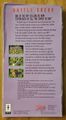 Back
Back -
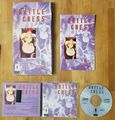 Contents
 -
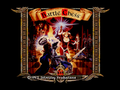 Screenshot
 -
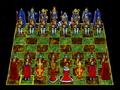 Screenshot
 -
 Screenshot
 -
 Screenshot
 -
 Screenshot
 -
 Screenshot
 -
 Battle Chess Console Plus Jan 94 Review
 -
 Battle Chess SuperGamePower Sept 94 Review


