20th Century Video Almanac

Overview
- Full Name: 20th Century Video Almanac
- Code:
- Type: First-person shooter, Racing, Vehicular combat
- Developer: The Software Toolworks
- Publisher: The Software Toolworks
- Language: English
- Release Date: 1993
- Region: NA
- Barcode: 0 24294 11441 0
- Local Title:
- Rarity: 1
- Notes:
Summary
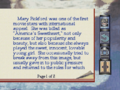
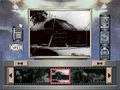
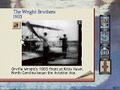
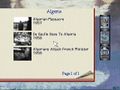
In The Best of Our Century, we've taken multimedia to dizzying new heights and you control the ride! Relive the most earthshaking events of the 20th century. Touch down on the moon with the Apollo astronauts. Relive Woodstock. Attend President Kennedy's inauguration. Take a front row seat for the incredible 1916 World Series. This multimedia reference work uses one of the world's largest archives of historical video to produce a visual encyclopedia of the century, with audio, photos, and text. The 20th Century Video Almanac provides a broad look at the events that shaped our world.
20th Century Video Almanac is the 3DO version of so many CD-Rom encyclopedias that were popular for PCs back in the pre-interwebs days. Menu navigation on the 3DO, however, makes this title a chore to work with.
Disc Archaeology
Findings from a byte-level analysis of the US retail disc image (670,351,360 bytes / 327,168 blocks). As a 1993 launch-window title, the disc is a time capsule of the 3DO platform's earliest production environment.
A launch-era system folder full of 3DO's own diagnostic tools
The disc's /System/Programs folder contains 24 programs — far beyond the handful of file utilities found on typical retail pressings — including 3DO's internal hardware test and debug suite, shipped to every customer:
BANGON— a CD-ROM stress tester (its first string is "Bangon: hello world!"), with options for checksumming, block-delay simulation, double-speed testing, Red Book reads and looping forever.CERTIFY— a CD-ROM certification tool that exercises CIRC error recovery and read/compare passes.LOOKIE— an Event Broker monitor with unusually chatty diagnostics ("Lookie says broker refused configuration request", "Lookie-loo unexpected signal").LUCKIEandMAUS— live control-pad and mouse input monitors.HELLOandHELLO.ROM— literal "Hello, world!" test programs.GDBUG,CPDUMP,DUMPFILE,FOCUS,BLINK.ROMand others — kernel, control-port and event-system debug utilities.
Other marks of the early Portfolio OS environment: empty system directories (Daemons, Devices, Drivers, Graphics/Fonts) are held open by 1-byte placeholder files literally named junk; the OS kernel image is a compact early build (os_code 78,852 bytes, boot_code 2,236 bytes, rom_tags 128 bytes); and the boot scripts carry no copyright header at all, just chatty tutorial-style comments.
Debug mode and developer strings
The application executable (launchme, 160,304 bytes) retains its full development scaffolding:
- The strings "entering Debug mode" and "exiting Debug mode" indicate a debug mode was left compiled into the retail build, alongside
DebuggerandCrashhandler strings and the plaintive fatal-error message "How did I get here?" - Assertion machinery survives intact: "SUSPICIOUS POINTER! %s = %x" and "File %s; line %i ### ASSERTION FAILED! %s".
- One source comment ships signed with its author's initials: "TextBox doesn't support non-ascii fonts, jc" — matching John Crane, first-listed programmer in the embedded credits.
- The code's Macintosh heritage shows everywhere: classic Mac Toolbox function names (
ExitToShell,FlushEvents), and the UI fonts aregeneva18(Apple's Geneva) plus in-house faces namedwawona18/wawona24.
Embedded credits
The complete staff roll is stored as plain text in the executable, with some memorable job titles: "Administration and Sanity" (Marie Summers, Gloria Garland), a writing credit for "Indefatigable Perlmutter", programmers John Crane, Kim Bowdish, Cindy Swafford and Chris Iden, and Software Toolworks CTO Mike Duffy.
The almanac database
The content is a bespoke micro-database of 2,400+ entries, all readable with custom Opera filesystem types: .stil photographs, .film Cinepak-era videos, .LNG long-form articles, .btn/.menu/.anim/.imag interface resources, and index files (A2C.IDX, C2A.IDX, YEARS.IDX) mapping articles to chronology. The master index (MASTER.TXT) opens with entry 0000 "Opening Title" followed by 0001 "Edison Builds First Movie Studio". The full text of every almanac article sits uncompressed and unencrypted in ALLDAT.DAT and the .LNG files — trivially extractable with any hex editor.
Unallocated space
37,307 blocks (~73 MB, 11% of the disc) belong to no file. Every byte was checked: the region is 100% the standard iamaduck mastering filler, with nothing hidden inside.
Media
-
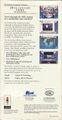 Back of the box
 -
 Contents of the box
 -
 Disc
Disc -
 Screenshot
 -
 Screenshot
 -
 Screenshot
 -
 Screenshot
 -
 Screenshot


