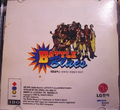
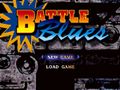
Battle Blues

Overview
- Full Name: Battle Blues
- Code: GDT-GA411
- Type: Turn-based tactics
- Developer: Shin's Deco
- Publisher: Goldstar(LG)
- Language: Korean
- Release Date: M1996
- Region: KR
- Barcode:
- Local Title: 배틀 블루스
- Rarity: 1
- Notes:
Overview
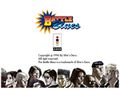
A domestic TBS (turn-based strategy) game developed by 'Shin's Deco (Shin's Entertainment)' in 1996 and released for 3DO by 'LG Electronics'. The name of the developer, Synzdeco, is an abbreviation of 'Syn's Design Consultant Group'.
In the late 1990s, when the world situation became unstable, the World Leaders Association disbanded the UN and created an organization 'ANA' centered on the United States and the EC. When this weakened, in 2015, the former Communist bloc and the Third World took the lead to create a terrorist group called 'FM', and the opposing forces formed their own forces and formed the team 'Blue' to set 'Brain City' as the stage It is a story about fighting against Sanya FM.
This work is one of the three domestic games released for 3DO, and is a turn-based strategy simulation game from a quarter view point of view. (The other two games are Armageddon and the first arc.) The
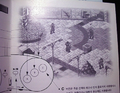
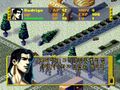
game controls move with the arrow pad, A button (selection and attack in battle), B button (use items in battle), C button (cancel), START button (combat) when weapon/item=status screen change). Press and hold the A button to quickly skip through in-game lines, and press the C button to skip videos.
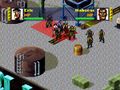
The combat feel is very bad, and once the character's turn returns, the distance that can be moved is automatically displayed. The movement itself is very inconvenient because it moves up, down, left and right based on the direction the character faces, and the game interface is like a real beggar because attack, item use, cancellation, etc. are executed by pressing a button without showing a separate icon.
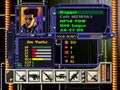
Character stats are divided into HP (Life), AT (Attack Power), DF (Defense), SP (Accuracy), MOV (Movement), EXP (Experience), and LEV (Level). The notation method is not uniform, so the gauge display and number display are jagged.
There are weapons, but no armor. Because there is a damage compensation effect, it ignores the difference in level and ability, but I don't know why the defense value exists, and it is difficult to develop a character because it is very difficult to level up by accumulating experience points for the following reasons.
There are no practice or free battle modes, only normal combat missions. It is difficult to defeat one enemy. Allies die so easily that it's hard to give experience to a specific character.
And even if you level up by accumulating experience anyway, the basic stats are so low that the stats don't go up significantly. The level-up effect itself is negligible because it goes up a bit.
Because the concept of accuracy exists, attacks often miss. Even if you equip the most expensive weapon, the damage taken when an attack hits is also randomly determined, so if you're lucky, it deals strong damage. If you're unlucky, you can't do any damage at all.
In addition, the ZOC effect is applied strangely, so there is a restriction on movement when the path is blocked due to siege when the units are crowded. When attacking, there is no restriction at all, so you can attack by jumping between units, so there is no meaning as a tank. If there is an obstacle between the units, no matter how small or insignificant it is, it is treated as a barrier and cannot be attacked.
As for the weapon itself, only the type of knife can be used unlimitedly. All firearms have a residual ammo limit, so if you run out of ammo, you can't really do anything.
Firearms can be purchased before starting a mission, and each character has a set of weapons that can be purchased. Even if you buy multiple weapons, it is meaningless because there is no equipment window and it is impossible to change weapons in battle.
Extra ammo is treated as an item and takes up one slot. You must replenish by acquiring magazines that are placed on the floor during battle.
But again, the ammunition of the pistol, the ammunition of the machine gun, and the ammunition of the missile launcher are all different. If you have ammunition other than that of the weapon you're using, it's of no use to anyone.
There is only one type of recovery item, 'Reisen (battle food)', but it is very important as it is the only recovery method in the game.
You can have multiple items, but when you have a different type, you cannot change the item in the slot, so you have no choice but to use that item or get a new item and overwrite the slot.
Items can only be used by the holder, and cannot be used or passed on to other characters.
In the worst case, HP is almost gone and needs to be recovered. I also have a recovery item, Reysen, but before that, the machine gun magazine item is in the list right before the Reysen, so you have to use it to get rid of it. Reysen will appear on the list, when the machine gun magazine cannot be used because the weapon you use is a pistol.
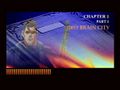
The battle is divided into several 'parts' within one 'chapter'. Here, the part is close to the concept of a 'phase', but the problem is that you can't do any intermediate saves, and you can only save by completely clearing the chapter.
If the main character dies during a battle, it is unconditionally game over. When allies die, they are treated as retreats, and they are all revived when moving on to the next part, but the ammunition is not recovered at all, so the character who used up the ammunition in the previous part cannot attack itself and can only use it as a bullet catch until replenishing ammunition. (The problem is that the enemy doesn't attack first because he has a lot of HP, and he can't tank because of the strange ZOC effect.)
Even if you don't want a mid-save, you should give them time to change the best weapon, but they don't even give it, so it's a total mess.
The money required to purchase weapons/items is paid at once only after clearing one chapter.
What I don't understand is that you can attack the same friendly unit.
At this time, the attacked ally is on the same side, but he utters a line dedicated to erroneous bombardment, but if it is included as a gag element, it is a bad taste. Aside from that, it's one of the most useless and inconvenient systems for a strategy game. (Isn't it just to see one of the erroneous lines of an ally?) The only
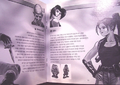
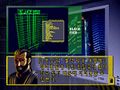
better thing is that the character's lines appear in the mission briefing, the start of the mission, and in the middle. It has a minimal story and character, and it is an unusual style video by the standards of the time.
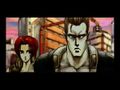
The video is not made with live action or full animation, but rather a dramatized cartoon illustration. I animated some of the movements of the characters in the picture (e.g. moving their mouths up and down). At first glance, this looks very cheap, but because it is based on sketches rather than illustrations, it is impressive because it has a stronger cartoon feel.
Although he is not a professional voice actor, there is a merit to support the Korean voice.
Conclusion is not recommended. The point is that the character dialogue in the game is active, the video based on the dramatic cartoon picture is impressive, and it is one of the few domestic games for 3DO games.. Inconvenient movement method, absence of command icons, strange ZOC effect, misleading allies Elements, item slots cannot be changed during battle, continuous battles in units of parts are basic, but weapon replacement and intermediate saves are not possible, etc. The overall game interface is unimaginably uncomfortable, making it difficult to play the game normally.
Credits
- Executive Producer Shin InSik
- Producer Jung Wonyoung
- Project Management Kim Yangho
- Script Writer Hong Joonhee
- Production Assistant Lee Doyoung
- Game Design Kwon DaeYong
- Original Story Shin Hoon
- Interface Design Park Jongmin
- Art Director Lee Jinwon
- Graphic Artist Lee Jinwon, Shin Hoon, Park Jongmin, Cho Ikheung, Wi Jeaok
- Illustrator Yang Youngsoon, Kim Jaehyun, Lee Sungbong, Seo Youngsub
- Animation Editing Cho Ikheung
- Program Director Park Sekyung
- Game Engine Developer Lee Jihong
- Program Park Sekyung, Lee Jihong, Bae Hoon
- Sound Design Kwon Daeyong
- Voice Actor Kim Changki, Lee Euisun, Lee Chaejin, Kang Philsoon
- Voice Actress Ahn Soyun
- Recording Studio YCAP
- Recording Engineer Hong Chuleui
- Logo and Symbol Design Shin's Deco Visual Communication Division
Disc Archaeology
Findings from a byte-level analysis of the Korean retail disc image (608,485,376 bytes / 296,960 blocks).
QuickTime names, 3DO contents
The disc's 26 cutscene movies (~470 MB, the bulk of the disc) all carry the Apple QuickTime extension .moov — but none of them are QuickTime files. Every one begins with a 3DO SHDR stream header: the movies were evidently produced as QuickTime on the Macintosh side and batch-converted to 3DO stream format, keeping their source extensions. The mission structure is readable straight from the names: m1b.moov/m1e.moov (briefing/ending) pairs for each of ten missions, plus character movies (rodrigo.moov, 48 MB) and prolog/epilog.
Developer traces in the executable
- An assertion in
launchmeships the source pathZ:extract.c— a file on the build machine's mapped network drive, frozen into the retail binary. - The romanization of character names drifts across the shipped file paths: the same characters appear as
simon/symon,sinobu/shinobu/shinobue,jun/juneandphyco/psycoin different directories — the artists and programmers each transliterated the Korean names their own way. - Every combat unit's stats live in
/wid_tables/as 144-byte binary.inifiles — 37 units from the player characters down todog.ini, the hostages and three grades of ninja — trivially hex-editable for balance modding.
The credits are a separate program
The /staff directory contains the end-credits sequence as a standalone ARM executable (outstaff, with a sibling bs), complete with its own fonts (name.font, job.font), backdrop CELs and music (staff.aifc). The entire romanized staff roll is embedded in it as plain text (see the Credits section of this page).
An EA save-file identifier
The credits program contains the NVRAM path /NVRAM/EA_SkWv3 — the save-file identifier of Electronic Arts' Shockwave. The code was evidently built from EA-derived sample source, and EA's save identifier shipped along with it, unchanged, in a Korean LG exclusive.
Mastering desynchronization in the filesystem itself
The Opera filesystem stores every directory as multiple redundant copies ("avatars"). On this disc the copies disagree: for five system directories (Devices, Drivers, Folios, Programs, Scripts) the first copy is a stale older generation — the first copy of /System/Devices lists FMVVIDEODEVICE.PRIVDEVICE in uppercase while the other two copies list it lowercase — and the two copies of the rom_tags boot table are likewise different generations. These are coherent alternate versions pressed into the disc, not dump errors; the root directory copies verify hash-identical and every file extent is intact.
Unallocated space
20,465 blocks (~40 MB, 7% of the disc) belong to no file, in a single run at the end of the filesystem. Every byte was checked: 100% standard iamaduck mastering filler, nothing hidden inside.
Speculation
The following connects on-disc evidence across LG's two 1996 Korean releases, Armageddon and Battle Blues. It is informed guesswork, not established fact, and would need confirmation from Korean development-scene sources.
- A shared engine programmer? Battle Blues' embedded credits list Lee Jihong as "Game Engine Developer" — initials L.J.H. Armageddon's disc contains a math lookup table named
ijh-tan.tab, its filename carrying the initials of whoever built it. If "ijh" is Lee Jihong (이지홍 — Korean surnames are romanized inconsistently, and the same person could initial themselves either way), the same engine programmer may have worked on both games, or engine/math code from one was reused in the other. Armageddon offers no text credits to check against, which is exactly why this stays speculation. - A shared production pipeline. The two discs are near-twins below the game data: identical image sizes (608,485,376 bytes), and an identical "mastering desynchronization" fingerprint — the same five system directories carrying one stale older copy (down to the same uppercase
FMVVIDEODEVICE.PRIVDEVICEin the stale generation) and mismatchedrom_tagscopies. Whatever workstation and disc-layout template LG's production chain used, both titles clearly went through it, and its system-folder image had been rebuilt at some point without regenerating the redundant copies. - Different hands on the games themselves. The two teams don't look identical: Armageddon's code cheers for a "Choi Il Hoon", who appears nowhere in Battle Blues' credits, and the two games' asset pipelines differ sharply (Armageddon mastered straight from a messy working directory with DOS batch files and backups; Battle Blues mastered clean, with Macintosh-sourced movie conversion). A plausible reading: separate development teams — possibly separate studios — feeding one shared LG publishing/mastering operation, with at least one engine programmer or code library in common.
Media
-
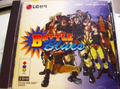 CD Front
 -
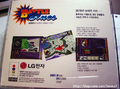 CD Back
 -
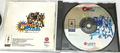 Contents
 -
 CD
CD -
 Manual
 -
 Manual
 -
 Manual
 -
 Screenshot
 -
 Screenshot
 -
 Screenshot
 -
 Screenshot
 -
 Screenshot
 -
 Screenshot
 -
 Screenshot
 -
 Screenshot
 -
 Screenshot
 -
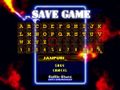 Screenshot
 -
 CD Cover signed by Art Director Shin Hoon


